Priced for the Wrong Project: Why Engineering Compensation Models Are Failing Both Firms and Clients
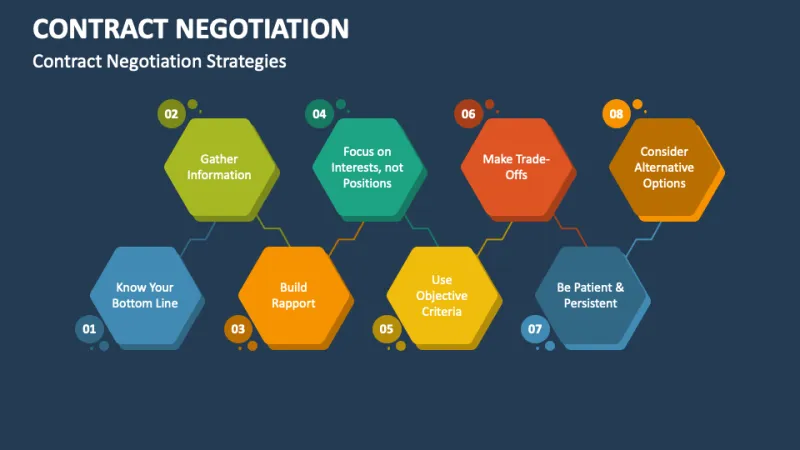
Photo: engineering contract negotiation pricing strategy business meeting professional, via www.collidu.com
The contract is signed. The scope is defined—or appears to be. The price is agreed upon, and both parties move forward with the reasonable expectation that the arrangement reflects the actual work ahead. Then reality intervenes. The project is more complex than the scope captured. Conditions change. Decisions made in the first month have cost implications that were impossible to predict at proposal stage. And the pricing model, built on assumptions that were already fragile when the ink dried, begins to strain against the project it was designed to govern.
This is not an exceptional scenario in U.S. engineering. It is the norm. And the pricing models being used to manage it were not designed for the work being done today.
Three Models, Three Sets of Misaligned Incentives
The fixed-bid model allocates risk to the engineering firm. In theory, it disciplines the firm to be efficient and rewards accurate estimation. In practice, it creates a powerful incentive to minimize scope at proposal stage—to describe the work narrowly enough to price it competitively, then manage change orders aggressively once work is underway. Clients who select fixed-bid contracts in the belief that they are transferring financial risk frequently discover that they have instead purchased a protracted negotiation over what was and was not included in the original scope.
The time-and-materials model allocates risk to the client. In theory, it provides flexibility for work that is genuinely difficult to scope in advance. In practice, it removes the engineering firm's incentive to be efficient and creates a dynamic in which clients—unable to evaluate whether the hours being billed represent appropriate effort—grow suspicious of the relationship. T&M contracts are frequently described by clients as the model they use when they have no choice, not the model they prefer.
The cost-plus model, common in government contracting and large infrastructure projects, attempts to split the difference. The client reimburses actual costs and adds a fee—either fixed or percentage-based. This arrangement is transparent, which is its primary virtue. Its primary vice is that it provides no incentive whatsoever for the engineering firm to reduce costs. A percentage fee, in particular, creates the perverse condition in which the firm earns more when costs are higher.
All three models share a foundational assumption: that engineering work is primarily a function of inputs—hours, materials, equipment—rather than outcomes. That assumption was always a simplification. In contemporary engineering practice, it has become a serious distortion.
The Complexity That Existing Models Cannot Price
Modern engineering projects in the United States are characterized by a level of interdisciplinary complexity, regulatory density, and technological uncertainty that the standard pricing models were not built to accommodate. A project that begins as a facility expansion may involve structural, mechanical, electrical, civil, environmental, and process engineering disciplines—each with its own risk profile, its own pace of uncertainty resolution, and its own relationship between early decisions and downstream cost.
The fixed-bid model requires that all of this complexity be priced at the outset, before most of the uncertainty has been resolved. The result is predictable: firms either price conservatively—adding contingency that inflates cost and reduces competitiveness—or price aggressively and absorb losses when the complexity materializes. Neither outcome is good for the industry.
T&M contracts, meanwhile, provide no mechanism for rewarding the firm that resolves complexity efficiently. An engineering team that finds a faster, more elegant solution to a difficult technical problem earns fewer hours and therefore less revenue than a team that works through the problem more slowly. The model is, in this sense, structurally hostile to the kind of creative problem-solving that distinguishes excellent engineering from adequate engineering.
What Outcome-Based and Tiered Pricing Could Change
The engineering industry has been slower than other professional services sectors to explore pricing structures that align compensation with value creation. Management consulting, legal services, and technology development have each developed hybrid models that more accurately reflect the relationship between risk, complexity, and outcome. Engineering has largely remained anchored to its traditional structures.
Several alternative frameworks merit serious consideration by U.S. engineering firms.
Complexity-tiered pricing. Rather than pricing an entire project under a single model, firms can develop a tiered structure that applies different pricing mechanisms to different work categories within the same engagement. Routine, well-defined work—standard calculations, code compliance reviews, drawing production for established system types—can be priced on a fixed basis. Novel, high-uncertainty work—first-of-kind systems, site conditions with significant unknowns, regulatory environments in flux—is priced on a T&M or risk-sharing basis. The client pays for predictability where it is achievable and accepts appropriate risk-sharing where it is not.
Risk-adjusted fee structures. Rather than burying contingency in a lump-sum price or leaving it entirely with the client, firms can structure fees that explicitly reflect the risk allocation agreed upon at contract signing. A base fee covers defined scope. An identified risk pool—transparently disclosed and jointly managed—covers quantified uncertainties. Savings from the risk pool at project completion are shared between client and firm according to a pre-agreed formula. This arrangement gives both parties an interest in risk management rather than risk assignment.
Outcome-linked compensation. In projects where the engineering firm's work product has a measurable impact on a downstream operational metric—energy consumption, throughput capacity, maintenance frequency, regulatory compliance cost—there is a reasonable basis for linking a portion of the firm's compensation to that metric. This is not a novel concept; it has been applied in energy efficiency services for years. Extending the logic to other engineering domains requires careful metric selection and contract design, but the underlying principle is sound: if the firm's expertise creates measurable value, its compensation should reflect that.
The Conversation the Industry Is Not Having
Adopting more sophisticated pricing structures requires a willingness to have conversations that the U.S. engineering industry has largely avoided. Clients must be willing to engage with pricing complexity rather than defaulting to the familiar comfort of a single number on a proposal cover sheet. Firms must be willing to invest in the estimating and risk analysis capabilities that more nuanced pricing demands.
Both parties must also be willing to acknowledge what the existing models obscure: that engineering projects are not commodity transactions. The firm that delivers a complex industrial project on time, within budget, and with a design that performs as intended for thirty years has created value that no standard pricing model adequately captures. The firm that delivers a technically compliant but operationally mediocre project at the same price point has created far less—and the client, locked into a contract that measures inputs rather than outcomes, has no pricing mechanism to recognize the difference.
The engineering firms that will define the next generation of the industry are those that find ways to make that difference legible—and to price accordingly.