Beyond the Demo: Measuring What AI Actually Costs U.S. Engineering Teams

Photo: NASA/SAO, Public domain, via Wikimedia Commons
AI tools arrive in U.S. engineering firms with a simple promise: less time on repetitive work, more time for judgment. The demonstration is compelling. A model drafts a specification section in seconds, summarizes a site visit, or produces a first-pass calculation. The pilot team reports hours saved. Leadership sees a path to leaner delivery. Then the invoice arrives—not only from the vendor, but from integration, verification, governance, and rework.
The productivity paradox is not a mystery. It is an accounting problem. Firms are measuring the hours that disappear from one part of the workflow while ignoring the hours that reappear somewhere else, often at a higher pay grade. The result is a familiar pattern: visible savings in the pilot, invisible costs in production.
The pilot is not the production system
A pilot usually runs with clean data, a small group of curious users, and an executive sponsor who clears obstacles. Production is different. Models must connect to document management systems, project controls, procurement platforms, and code repositories. That integration work is engineering in its own right. It requires data mapping, access controls, versioning, audit trails, and a support model. None of those costs appear in the subscription price.
There is also the matter of adoption. Engineers do not abandon trusted workflows because a tool is available. They adopt it when the output is reliable, when the review burden is clear, and when the firm has defined who is accountable for errors. Training is not a one-time lunch session. It is a change management program with reinforcement, coaching, and performance measurement.
Where AI earns its keep
The technology is genuinely useful in specific places. It can accelerate document drafting, generate code scaffolding, summarize meetings, search large technical libraries, and produce first-pass quantity or load estimates. It can flag inconsistencies in specifications and help teams navigate standards. These are low-judgment, high-volume tasks where a human reviewer can catch errors before they propagate.
The savings are real when three conditions hold: the output is easy to verify, the consequence of an error is contained, and the reviewer has spare capacity. Remove any one of those conditions and the economics change. A tool that saves an engineer two hours but creates three hours of senior review is not a productivity gain. It is a cost transfer.
Where the work goes instead
Much of the hidden cost appears downstream. A model produces a draft that looks complete, so a junior engineer spends less time structuring the problem but more time checking assumptions. A senior engineer reviews the output because accountability has not moved. A document control specialist reconciles versions. A project manager investigates why a generated schedule conflicts with procurement lead times.
This is not a reason to reject AI. It is a reason to measure the whole workflow. The relevant question is not how many hours the tool saves. It is whether the fully loaded cost of producing an accepted deliverable falls. That cost includes licenses, compute, integration, training, review, rework, governance, and the opportunity cost of the engineers who manage the tool.
The full cost ledger
Most business cases undercount the following items:
- Subscription and compute costs, including seat creep and usage tiers.
- Integration and data plumbing, including connectors, cleaning, and maintenance.
- Security, privacy, and compliance review, especially for client-owned data.
- Verification and quality assurance, including sampling and sign-off.
- Rework and correction, including errors found after issue.
- Change management and training, including productivity loss during rollout.
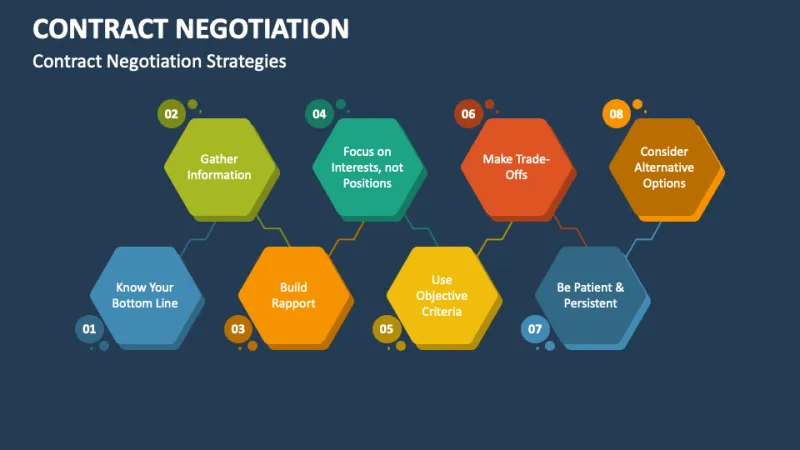
- Vendor management, contract review, and renewal negotiation.
- Tool sprawl, when multiple teams buy overlapping products.
- Opportunity cost, when senior engineers become de facto product managers for AI.
A firm can still justify AI after accounting for these costs. Many will. But the justification must be based on net contribution, not gross hours saved.
A better measure: cost per accepted deliverable
Leaders need a metric that survives contact with production. Cost per accepted deliverable is a useful starting point. Define a deliverable narrowly—a calculation package, a specification section, a validated model, a construction work package. Establish a baseline that includes touch time, review time, rework, and cycle time. Then measure the same deliverable after AI is introduced.
The comparison should use a control group or a phased rollout. It should track quality escapes, not only speed. It should separate low-risk and high-risk deliverables. A firm may find that AI reduces cost for routine documentation but increases cost for safety-critical calculations. That is a useful finding. It allows targeted investment instead of a blanket mandate.
The leadership test
Before scaling an AI tool, ask five questions. Which deliverable will improve? Who is accountable for verifying the output? What downstream review hours will increase? What is the fully loaded cost per accepted deliverable? How will the firm detect quality erosion before a client does?
AI can be a valuable engineering tool. It can also become a new layer of cost that hides inside pilot reports. The difference is measurement discipline. Firms that treat AI as a workflow change—not a software purchase—will capture the gains. Firms that celebrate isolated hours saved will pay for the same work twice.
The bottom line
The productivity paradox is not evidence that AI fails. It is evidence that firms are measuring the wrong unit. Hours saved in one seat are not savings if they become review hours in another. The durable metric is net cost per accepted deliverable, measured across the full workflow and audited after production. That is how engineering leaders turn a promising demonstration into a defensible investment.