Bricks and Mortar Are the Easy Part: Why Reshoring Is a Capital Engineering Program
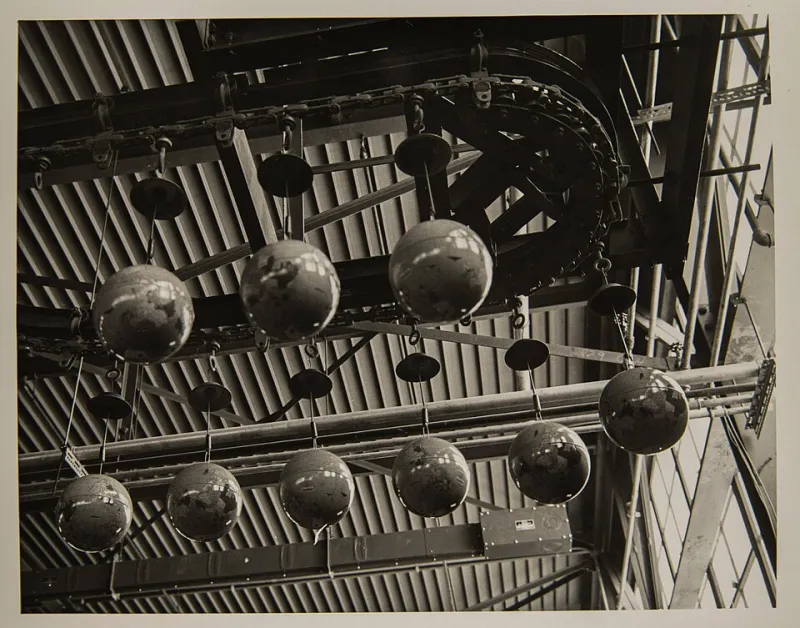
Photo: Rand McNally and Company, Public domain, via Wikimedia Commons
Reshoring announcements are usually framed as a win for American manufacturing. A company commits to a new plant, a revived facility, or a domestic supplier network. Local officials celebrate the jobs. The press release shows a rendering. The board approves a capital budget. What often remains underspecified is the engineering program required to make the facility produce at the promised cost and quality.
That gap is not a public relations problem. It is a capital planning problem. A reshoring move is not simply a real estate decision or a hiring plan. It is a brownfield or greenfield engineering program with utility upgrades, process validation, automation integration, and workforce readiness. Firms that budget it as anything less tend to discover the difference during commissioning.
The announcement versus the program
The announcement describes outcomes: capacity, jobs, supply chain resilience. The program delivers them through a sequence of engineering decisions. Those decisions begin with site due diligence and extend through design, construction, equipment installation, commissioning, qualification, and operational readiness.
A building can be leased in months. A manufacturing process that meets customer specifications, regulatory requirements, and cost targets can take much longer. The building is visible. The engineering scope is not. That asymmetry is where budgets go wrong.
What the building does not tell you
An existing facility may look adequate and still be unsuitable. The power service may be too small for the new process. The floor slab may not carry the equipment loads. The clear height may not accommodate the process. The HVAC system may not control temperature and humidity to the required tolerance. Compressed air, process water, wastewater, and fire protection may need upgrades. Permitting may take longer than the lease allows.
Utility upgrades are a common source of schedule risk. A new process may require a larger transformer, a new substation, or a dedicated gas line. Those are not procurement details. They are long-lead engineering items that can determine the startup date. If the site team treats them as facilities work, the project team may not discover the constraint until equipment is ready to install.
The engineering scope beneath the announcement
Process validation is another underestimated area. In regulated industries, a new line or a transferred product may require installation qualification, operational qualification, and performance qualification. The engineering team must design the process, define critical parameters, install instrumentation, and prove that the process performs consistently. That work cannot be compressed into a commissioning checklist.
Automation integration adds another layer. New equipment must communicate with manufacturing execution systems, enterprise resource planning platforms, quality systems, and controls networks. The integration architecture must be designed, tested, and validated. Vendor packages rarely arrive fully integrated. Someone must own the data model, the network segmentation, and the acceptance testing.
Workforce readiness is equally an engineering concern. Operators and technicians need training on new equipment, controls, and safety procedures. Maintenance teams need spare parts, documentation, and diagnostic tools. If the facility starts production before the workforce is ready, the engineering team inherits the resulting downtime and quality problems.
Why the budget misses it
Reshoring budgets often start with a real estate estimate and a vendor quote. The real estate estimate covers the shell, not the process. The vendor quote covers equipment, not integration. The capital budget may include contingency for construction, but not for unknown site conditions or utility upgrades. The schedule may assume that permits, power, and validation can run in parallel with equipment installation.
There is also an ownership gap. Real estate teams lead site selection. Operations teams lead hiring. Procurement teams lead equipment purchasing. Engineering is brought in to support, not to lead. Without a single owner for the integrated capital program, the interfaces between those workstreams become the risk.
Running reshoring as a capital engineering program
A better approach treats reshoring as a stage-gated capital program. Phase zero is due diligence: utility capacity, structural capacity, environmental constraints, logistics, permitting, and workforce availability. Front-end engineering design follows, with a scope baseline that includes process, utilities, automation, validation, and operational readiness.
The program should have an integrated schedule that reflects long-lead utility and equipment items. It should have a risk register that names site conditions, vendor integration, and regulatory approval as project risks, not externalities. It should define decision rights between real estate, operations, procurement, and engineering. And it should include a commissioning and qualification plan before construction begins.
The readiness test
Before approving a reshoring budget, ask whether the program includes the following: a utility capacity study, a structural assessment, a process validation plan, an automation integration architecture, a workforce training plan, and a commissioning schedule with named owners. If those items are missing, the budget is not a capital program. It is a down payment on surprises.
Reshoring is a genuine opportunity for U.S. manufacturers. It can shorten supply chains, reduce risk, and create domestic capacity. But the engineering work is not a detail to be sorted out after the lease is signed. It is the program. Firms that plan it that way will meet their startup dates. Firms that treat it as real estate and hiring will spend the first year of production fixing the facility they thought they had.
The bottom line
Bricks and mortar are the easy part. The difficult work is the engineering scope that connects a building to a process, a process to a workforce, and a workforce to a customer. Reshoring succeeds when it is budgeted and governed as a capital engineering program, not as a relocation announcement.