The Receipt Nobody Budgeted For: How Tariff Exposure Becomes a Project Loss
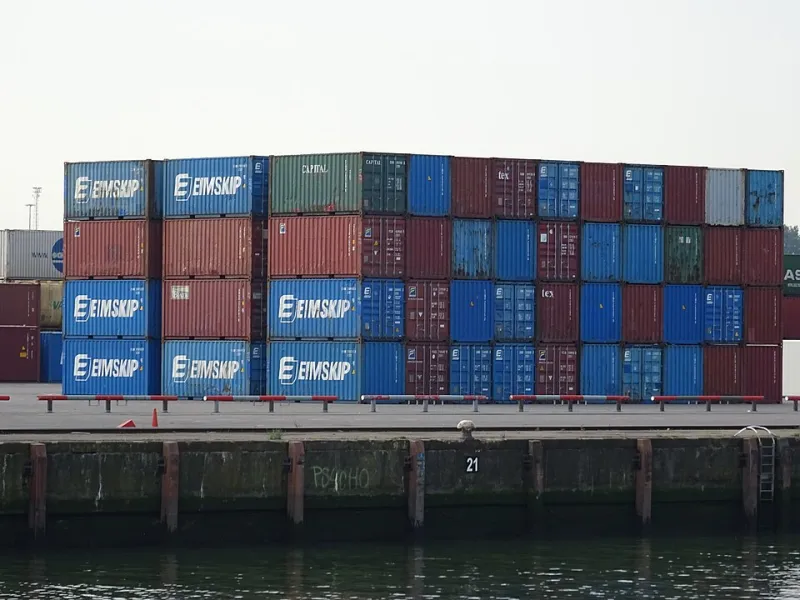
Photo: AgainErick, CC BY-SA 4.0, via Wikimedia Commons
In a typical U.S. capital project, the equipment package is priced long before it is bought. A vendor quotes a skid in the first quarter; the purchase order is issued two or three quarters later. In between, duty schedules, country-of-origin determinations, and commodity indices move — sometimes modestly, sometimes not. Someone absorbs that movement. The only real question is whether the contract decided who that someone would be before the bid was signed.
Most of the time, it did not. The result is a class of loss that never appears in a bid tabulation, never shows up in a change order log until late, and surfaces instead as a margin erosion the contractor cannot fully explain and the owner cannot fully audit.
The assumption buried inside every lump sum
A lump sum feels fixed because it is stated as a single number. In practice it is a stack of assumptions. The vendor's price is valid for thirty days. The contractor's escalation carry is based on a published index that may not track the specific commodities in the package. The country-of-origin determination is based on where final assembly occurs, not where the components were made. And the owner reads the whole thing as a ceiling.
Each assumption is defensible on its own. Together they create a gap between the bid basis and the as-procured reality that can run into seven figures on a mid-sized industrial project — particularly where electrical equipment, structural steel, and specialty valves are involved.
Where the exposure actually hides
The headline tariff rate is rarely the problem. The problem is classification. A component can enter under one of several harmonized codes depending on how it is described, and the difference between codes is not academic. Origin is the second layer: substantial transformation rules mean a finished assembly's origin may differ from the origin of its highest-value subcomponent, and documentation from offshore suppliers is often thinner than the buyer assumes. Domestic-content preferences add a third layer, because the threshold is calculated against a cost basis that vendors interpret inconsistently.
Freight and logistics deserve separate attention. On oversized or heavy equipment, transport can represent a meaningful share of landed cost, and fuel surcharges and port congestion do not follow the same curve as material indices. A procurement plan that models material escalation but not freight exposure is modeling half the problem.
The contract gap that decides the outcome
Most agreements contain a changes-in-law provision. Fewer contain one that resolves the specific question a tariff increase raises. Common gaps include:
- A changes-in-law trigger that excludes trade remedies, treating duties as commercial risk rather than legal change.
- An effective date set at contract execution rather than at the bid basis date, leaving the gap between quotation and award unallocated.
- A causation standard that requires the contractor to prove a specific dollar impact against a baseline that was never recorded.
- A materiality threshold high enough that several individually immaterial increases accumulate into an unclaimed loss.
Where language is ambiguous, the ambiguity does not resolve neutrally. It resolves in favor of whichever party has leverage at the moment of the dispute — which is usually after the equipment has shipped and the schedule is already committed.
Pricing the risk before the schedule sets
The most effective control is a tariff and trade exposure register developed at bid stage, not at procurement. For each significant package, the register should record origin, likely classification, estimated duty at current rates, expected order date, expected delivery date, and the sensitivity of the package to a defined rate change. Packages ordered late in the schedule carry more exposure than packages ordered immediately after award, because the interval between pricing and purchase is where the movement occurs.
That register does two things. It tells the estimator where to carry contingency and how much. And it tells the contract drafter where pass-through language is genuinely needed rather than routinely included.
Structuring pass-through deliberately
There are four broad approaches, and each has a cost:
- Firm price with embedded contingency. Simple to administer, but the risk premium is priced into the bid and paid whether or not the event occurs.
- Provisional sum with reconciliation. Duties are carried as an allowance and settled at actual cost against documentation. Transparent, but requires discipline in record-keeping and a clear definition of what counts as an offsetting decrease.
- Index-linked escalation. Payments adjust against a published index. Effective where a credible index exists for the commodity; unreliable where the exposure is classification or origin driven.
- Open-book procurement on volatile packages. The owner sees the actual landed cost and pays a defined fee. Removes the dispute but shifts working capital and administrative burden to the owner.
A fifth option is often overlooked: bid alternates. Asking vendors to price both a foreign-sourced and a domestically sourced configuration at bid stage converts an unknown future premium into a known current number, and gives the owner a documented basis for a decision rather than a post-award negotiation.
What owners should ask before award
A short list of questions will surface most of the exposure: What is the basis date for pricing, and what happens to pricing if award slips? Which packages are ordered more than ninety days after notice to proceed? What origin documentation will the vendor provide, and who verifies it? If a duty rate changes between bid and shipment, what does the contract say — in one sentence, not a clause reference? If the answer to the last question requires interpretation, the risk is unallocated.
Landed cost is a number that should be tracked from the first estimate forward, not discovered at the invoice. Projects that treat it that way rarely find themselves absorbing costs they never bid.